Hrvatski
 Italiano
 Français
- INFO
- TEAM
- MULTIMEDIA
- PRESS
- DOWNLOAD
If buildings could talk (IBCT) is a international collaborative project that unfolds the delicate, inner traces of the erasure of collective memory from the local history, exemplified through concrete urban spaces (buildings and their surroundings) which are/were landmarks in one city/area. This obliteration leads towards almost unrecognizable change of the local context affecting entire communities and various social strata as well as the overall urban tissue. IBCT attempts to speak creatively and interdisciplinary about local urban problems, sometimes relating to a single building or block – business or residential – in three different cities: Skopje, initiated by the partner FRU – Faculty of Things that Can’t Be Learned, in Belgrade – with the partner Supervizuelna and in Zagreb – with the partner Shadow Casters. Through detailed analysis of this building/block components, contextualized within its surrounding and historical developments, IBCT relates to the tendencies of (non)solidarity, degradation, (re)writing of reality – also showing also which the conflicts in those buildings/blocks that potentially open ruptures in the general societal structure are.
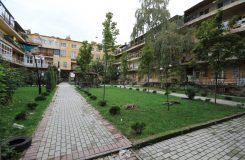
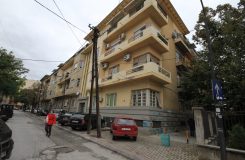
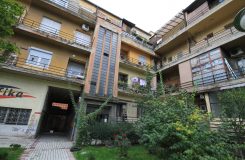
The buildings that were taken into consideration are: Business–residential Complex “Belville” in collaboration coordinated by Supervizuelna, Belgrade, Railway Workers’ Residential Complex, Skopje, coordinated by FRU-Faculty of things that can’t be learned, Bitola/ Skopje and “Nada Dimić” Factory – “Moster/Penkala” factory, coordinated by Shadow Casters, Zagreb, in the period of October 2015 till September 2017.
The international project If buildings could talk (IBCT) is funded by the Balkan Arts and Culture Fund BAC. BAC is supported by the Swiss Government through the Swiss Agency for Development and Cooperation (SDC) and the European Cultural Foundation (ECF).
Some local action in Zagreb done by the Shadow Casters and its partners are partly funded by Ministry of Culture Republic of Croatia and City office for education, culture and sport of Zagreb.

Local partners in Zagreb: Pogon – Zagreb Center for Independent Culture and Youth and Tigar Theater.